Keynotes
Twenty Years of the UN Convention on the Rights of Persons with Disabilities
Twenty years after the adoption of the UN Convention on the Rights of Persons with Disabilities (CRPD) by the United Nations, the question arises as to what impact the Convention has had. The CRPD has significantly advanced the international human rights framework. National and international disability policy has moved from the niche of welfare policy into the realm of human rights policy. The United Nations, its human rights bodies and the institutions of international development cooperation have been transformed by the CRPD. The international disability movement has also become more professional in its human rights work. Of the 193 Member States of the United Nations, all are now parties to the CRPD. The EU is the 194th party. The CRPD Committee in Geneva has now reviewed more than 145 of them, half of which took place during my time as a committee member. Drawing on this experience, I will report on what we have learnt from monitoring the rights enshrined in the CRPD: the tools and approaches we have used to negotiate, persuade, educate, humanize and quantify, in order to drive change. I will outline the normative standard for self-determined living and equal participation at global and international level, as developed by the CRPD Committee. And I will explore what constitutes human rights-based research in this context.
About the author
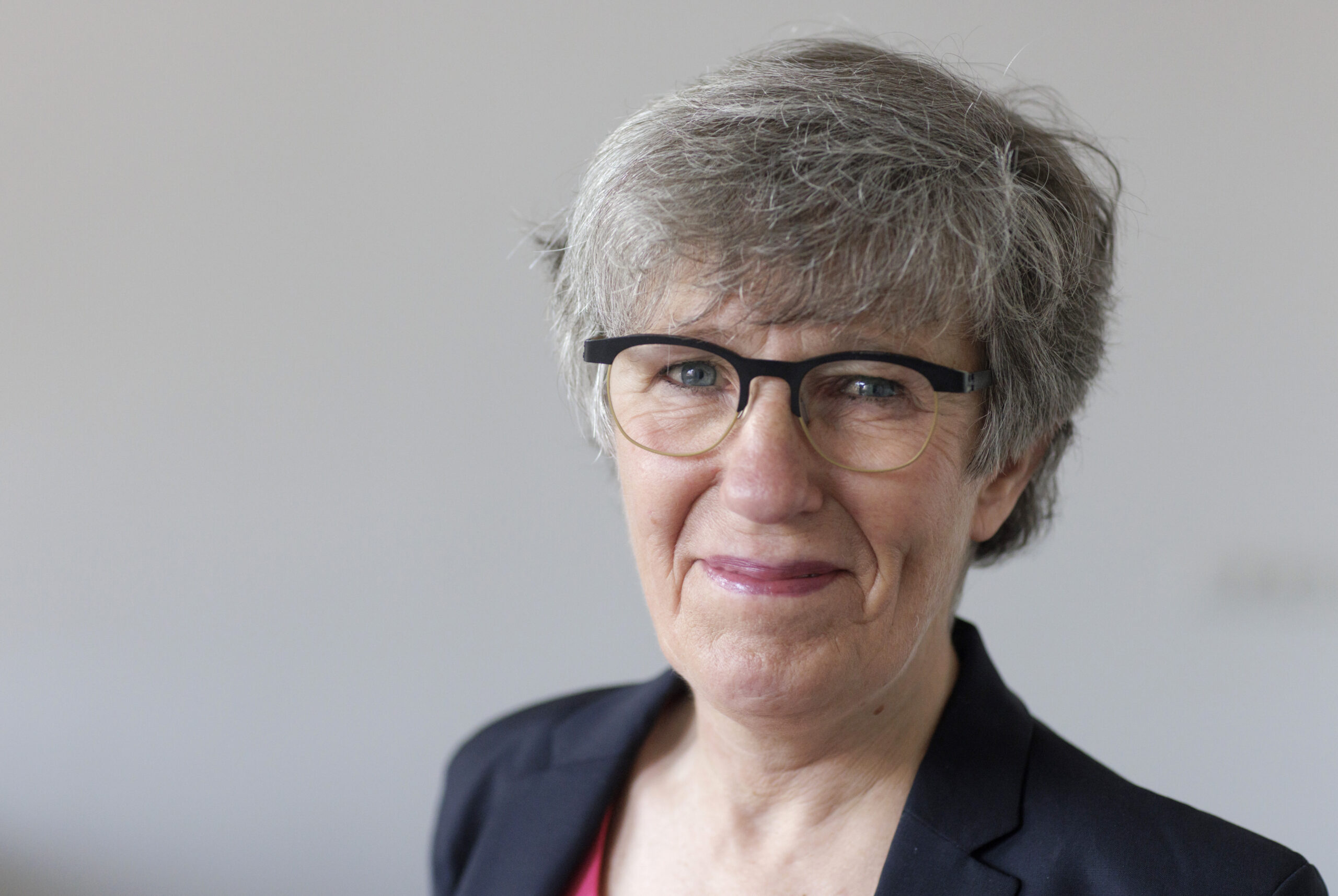
Theresia Degener was Professor of Law, Administration and Organisation from 1998 to 2010 and Professor of Law and Disability Studies from 2010 to 2024 at the Protestant University of Applied Sciences Bochum. From 2015 to 2024, she headed BODYS, the Bochum Centre for Disability Studies. Her research focuses on disability and gender studies, anti-discrimination and human rights. From 2011 to 2018, she was a member of the United Nations Committee on the Rights of Persons with Disabilities and served as its Chair for the last two years.
Translated with DeepL.com (free version)
From Global Commitments to Local Realities: Decolonising Participation and Reclaiming Community Agency Twenty Years after the CRPD
Twenty years after the adoption of the United Nations Convention on the Rights of Persons with Disabilities (CRPD), the global disability movement celebrates significant normative progress in recognising persons with disabilities as equal citizens and active agents of change. Yet, for many communities in the Global South, particularly across rural Africa, the promise of “full and effective participation” remains constrained by structural inequalities, colonial legacies, and policy-practice gaps. This keynote interrogates how global frameworks such as the CRPD are localised, resisted, and reimagined within African contexts, using evidence from disability inclusion research, community advisory work, and policy development in Zimbabwe and Southern Africa. It argues that decolonising participation goes beyond inclusion within existing structures; it requires reclaiming local knowledge, redistributing power, and strengthening community agency. Drawing on lived experiences of Organisations of Persons with Disabilities (OPDs) and inclusive education and mental health initiatives, the presentation demonstrates how locally driven solutions bring the CRPD to life. The keynote concludes by proposing a decolonial framework for the next 20 years — one that advances intersectionality, co-production, and epistemic justice to transform the CRPD from a global commitment into a lived, community-rooted reality.
About the author
Professor Tsitsi Chataika is a leading scholar and practitioner in disability inclusion, inclusive education, and social justice based at the University of Zimbabwe. For the past two years, she has served as the Disability Inclusion Advisor for CBM Global Disability Inclusion Zimbabwe. With over twenty-five years of experience, her work spans strategic advisory, policy development, and participatory research across Africa, focusing on decolonising inclusion and strengthening Organisations of Persons with Disabilities. An accomplished author and editor of several international handbooks on disability and education, Professor Chataika has significantly contributed to shaping disability frameworks in Zimbabwe and the wider region. Her scholarship and practice are grounded in human rights, intersectionality, and community empowerment, foregrounding the centrality of lived experience in transforming societies for all. She continues to influence global and regional dialogues on inclusive development, bringing an authentic African perspective to the advancement of disability rights.
Implementing the UN Convention on the Rights of Persons with Disabilities: a challenge for local authorities and social services
Numerous local authorities have already decided to implement the provisions of the UN CRPD through systematic planning. Many social services are developing their services with a view to enabling self-determination and equal participation. In doing so, they encounter various challenges.
Enabling people to live independently requires the development of infrastructure and inclusion-oriented services to be brought together across different areas of action and in a socio-spatial context. This requires new structures for cooperation. The tasks of local authorities and service providers and their cooperation must be redefined. The challenge is to make planning and development processes participatory, especially by involving people with disabilities. New demands are being placed on specialists in administration and social service providers in terms of the organisational structures of their service offerings and the design of their professional activities.
In the field of rehabilitation, the reform of Social Code IX through the Reform Act in 2016 has opened up opportunities for inclusion-oriented further development. In child and youth welfare, the Child and Youth Empowerment Act (2021) set the course for inclusive child and youth welfare. In other areas, such as nursing care and legal guardianship, there is also a noticeable shift towards greater self-determination and equal participation. However, it should be noted that the opportunities arising from this have only been exploited to a limited extent so far. There is a considerable tendency to cling to old orientations, procedures and structures. The provisions of the UN CRPD and corresponding reform approaches in other laws are ignored, ridiculed as “unrealistic” or discredited as “ideological”. A socio-cultural rollback is unmistakable.
Against this backdrop, the lecture will discuss ways in which new forms of local planning under the leadership of local authorities can promote the development of an inclusive community and related social support services.
Overall, it will be made clear that transdisciplinary scientific engagement with municipal participation policy and participation planning is extremely important as one of the essential instruments for implementing the UN CRPD. In this regard, participation research will continue to have important tasks to perform in the future.
About the author:
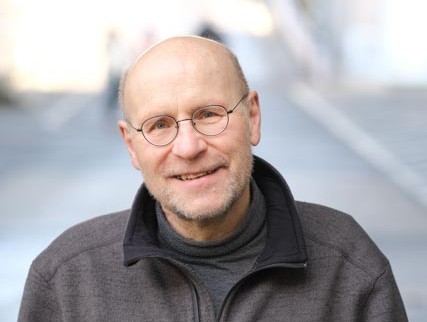
Albrecht Rohrmann is a professor of social pedagogy specialising in social rehabilitation and inclusion, and spokesperson for the Centre for Planning and Development of Social Services (ZPE). His work focuses on the development and structural conditions of support for people with disabilities and the examination of planning theories and practices. He was involved in a cooperation project between the ZPE and the Monitoring Centre for the UN Convention on the Rights of Persons with Disabilities at the German Institute for Human Rights, funded by the Federal Ministry of Labour and Social Affairs, to investigate systematic planning activities for the implementation of the UN Convention on the Rights of Persons with Disabilities (www.unbrk-kommunal.de).
From Participation to Shared Power. Sharing Power. Transforming Systems.
Participation by people with disabilities is not a matter of good practice; it is a fundamental human right and a prerequisite for meaningful systems change. Yet, people with disabilities are still too often invited to participate only after key decisions have already been made. Genuine participation begins with recognising people with disabilities not only as rights holders, but also as knowledge holders and equal partners in creating change. Drawing on long-term experience across research, higher education, self-advocacy, community-based services, deinstitutionalisation, and public policy, this keynote argues that the most meaningful change occurs when people with disabilities are not merely participants in decision-making processes, but co-creators of knowledge, practice, and policy. Rather than presenting participation as a method, the keynote frames it as a culture of shared responsibility, shared decision-making, and shared power. Its central message is simple: when we share power, we do not merely improve individual projects or services. We transform systems.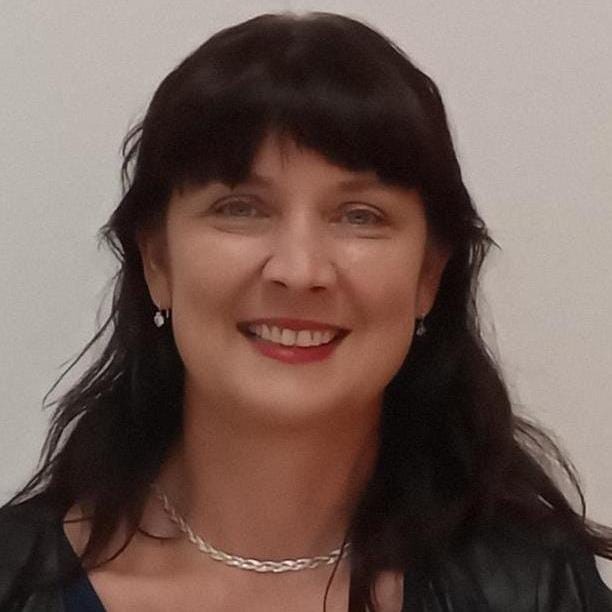
About the author:
Šárka Káňová, Ph.D. is a researcher and senior lecturer at the Faculty of Education, University of West Bohemia, Czech Republic. Her work focuses on the rights of people with intellectual disabilities, participation, the transition to adulthood, community-based support, and deinstitutionalisation. She combines research, higher education, and collaboration with people with lived experience and their families to promote inclusive practice and systems change. She also serves as a National Board Member of Inclusion Czech Republic.